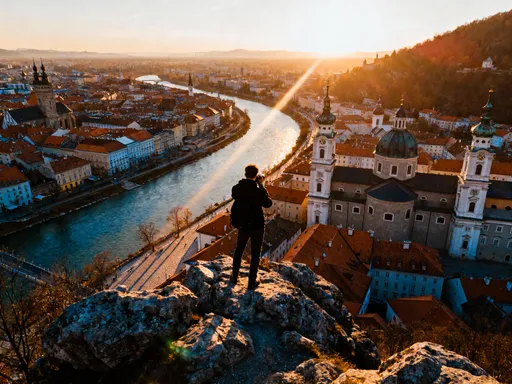
Halstatt Unhurried: Where Time Slows and Beauty Speaks
Have you ever stepped into a place that felt like a painting come to life? That’s Halstatt. Nestled between mirror-like lake waters and towering alpine peaks, this Austrian village isn’t just beautiful—it’s transformative. I went seeking scenery, but found something deeper: a rhythm of life that refuses to rush. Here, every cobblestone, every quiet café by the shore, invites you to linger. This isn’t travel at speed; it’s slow travel at its soulful best.
The Allure of Halstatt: More Than a Postcard
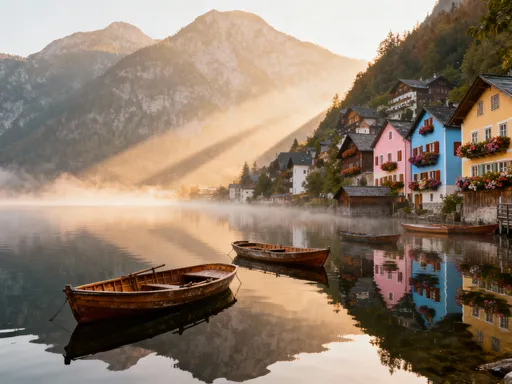
Halstatt, a UNESCO World Heritage site since 1997, occupies a narrow stretch of land where the Hallstätter See meets the base of the Dachstein Mountains. Its fame is no accident. The village’s skyline—painted houses with flower-laden wooden balconies, steep slate roofs, and the bell tower of the Catholic Parish Church rising above—reflects perfectly in the still waters, creating a visual harmony that feels almost too perfect to be real. Yet, Halstatt is not merely a backdrop for photographs. Its true appeal lies in its atmosphere: a quietude that settles over visitors like morning mist. While thousands arrive daily during peak season, especially on summer weekends, the village has preserved hidden corners where time seems to pause.
What makes Halstatt more than a postcard is its deep-rooted connection to nature and history. Archaeological evidence shows human settlement here for over 7,000 years, with salt mining dating back to the Iron Age—so far back that the term “Hallstatt culture” is used by archaeologists to define an entire European prehistoric period. This sense of continuity imbues the place with a quiet dignity. Even as tourism grows, the village resists becoming a theme park. Residents still live in centuries-old homes, fish in the lake, and tend to gardens tucked between stone walls. For the mindful traveler, there are moments—early morning fog drifting across the water, the soft chime of church bells at dusk—when Halstatt reveals not just beauty, but a way of being.
Though parts of the main promenade can feel crowded by mid-morning, especially when cruise boats dock, the village rewards those who wander slightly off the central path. A quiet lane leading uphill, a bench overlooking a secluded cove, or a family-run bakery opening at dawn—these are the spaces where Halstatt’s soul remains intact. The key is intention: to see not just the sights, but the life that continues beneath the surface of tourism.
Why Slow Travel Fits Halstatt Perfectly
Slow travel is not just a trend—it’s a philosophy. It means moving with purpose, staying longer in fewer places, and engaging deeply with local rhythms. Halstatt, with its compact layout and rich sensory detail, is one of Europe’s most natural fits for this approach. At just over half a mile long and barely wide enough for two cars to pass, the village encourages walking, pausing, and returning to the same spot at different times of day to see how light and mood shift. There’s no need to rush from one landmark to the next; the real discoveries happen in the in-between moments.
Unlike destinations built for checklist tourism, Halstatt offers an experience measured not in kilometers covered but in moments absorbed. Imagine sitting on a wooden dock with a warm pretzel, watching a lone rower glide across the lake. Or pausing to watch an elderly artisan polish hand-carved wooden ornaments in a small shop window. These are not attractions; they are glimpses into a life that values care over speed. When you travel slowly, you stop seeing the village as a collection of photo ops and begin to feel its pulse.
Mass tourism often flattens a place into its most iconic image—the lakeside view, the church steeple, the red-roofed houses. But slow travel allows you to go deeper. It means visiting the same bakery each morning and eventually learning the baker’s name. It means noticing how the light changes on the mountains at different hours, or how the lake sounds different during rain versus stillness. In Halstatt, time becomes the currency of experience. The longer you stay, the more the village reveals—not through grand gestures, but through subtle, daily rhythms that only patience can uncover.
The Lakeside Zone: Where Stillness Meets Beauty
The eastern shore of Hallstätter See is the heart of Halstatt’s quiet magic. This lakeside promenade, known locally as the Lahn, runs parallel to the water and offers uninterrupted views of the Dachstein range across the lake. It is here, in the early hours before the day begins, that Halstatt feels most alive in its stillness. Morning fog often lingers just above the surface, dissolving slowly as the sun rises behind the peaks. Rowboats, moored overnight, bob gently in the current. The only sounds are the soft lapping of water, the call of waterfowl, and the distant chime of a cowbell from a hillside pasture.
Walking the Lahn at sunrise is one of the most grounding experiences a visitor can have. The cool morning air carries the scent of wet stone and pine. Benches are placed at intervals, each positioned to frame a different view—some facing the mirror-like water, others turned toward the village itself, allowing you to appreciate the cascade of houses built into the mountainside. This is not a place to hurry through. It is a place to sit, breathe, and let the landscape settle into your memory.
Photography is, of course, a natural impulse here. The reflections on the lake are so perfect they seem unreal. However, there is an unspoken etiquette among those who visit early: silence is part of the beauty. Loud voices, music, or intrusive drone use disrupt the peace that makes this place special. The most respectful way to capture Halstatt is not with a high-powered lens from a crowded viewpoint, but with quiet presence. A single, mindful photo taken at dawn, when the world feels hushed, carries more truth than a hundred snapshots from midday.
Later in the day, as tour groups arrive and the promenade fills, the lakeside takes on a different energy. But even then, small pockets of calm remain. A quiet cove near the Protestant Church, a wooden pier used by local fishers, or a shaded bench beneath an ancient linden tree—these are the spots where you can still find solitude. The lake, after all, belongs to everyone and no one. It reflects not just the mountains, but the mood of those who stand before it.
The Village Core: Living History Without the Rush
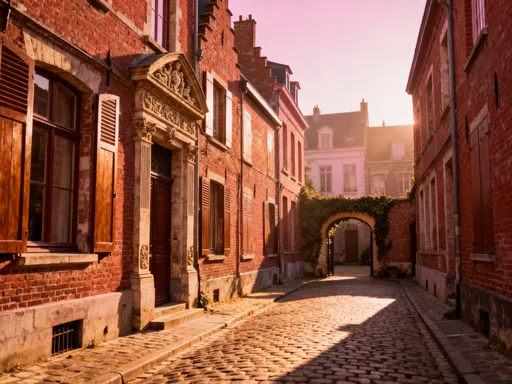
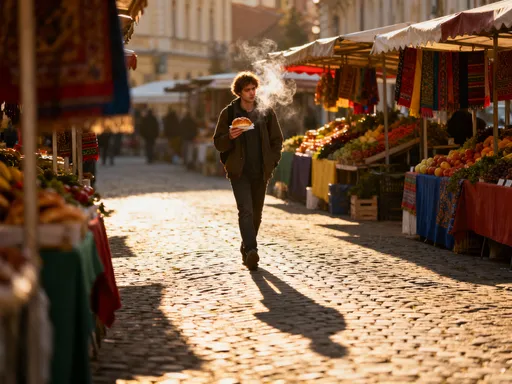
The historic center of Halstatt, clustered around the Marktplatz and the Catholic Parish Church, is a maze of narrow lanes, stone steps, and centuries-old buildings. Unlike reconstructed historic districts in other European towns, Halstatt’s core is not a museum piece—it is lived-in. Children ride bikes down cobbled alleys, shopkeepers sweep wooden thresholds each morning, and laundry hangs from balconies like colorful flags. This authenticity is what gives the village its soul. To walk these streets is to step into a community that has adapted to tourism without surrendering its identity.
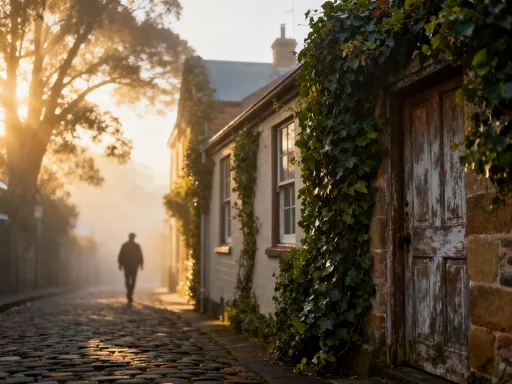
The trick to experiencing the village at its most genuine is timing. Arriving before 10 a.m. or returning after 6 p.m. transforms the atmosphere. During these quieter hours, the echoes of daily life become audible. You might see a fisherman sorting his catch by the water’s edge, an artisan sanding a wooden duck decoy in an open doorway, or an elderly couple sharing a bench with a thermos of tea. These are not performances for tourists; they are the rhythms of ordinary life, continuing as they have for generations.
The Catholic Parish Church, with its striking bell tower and ossuary adorned with hand-painted skulls, is one of the most visited sites. Yet, even here, the experience can be profound rather than crowded if approached with patience. Visiting during weekday morning services, when locals attend mass, allows you to witness the church not as a monument but as a living place of community. The ossuary, while unusual, is treated with reverence. Each painted skull bears the name and profession of the deceased, a reminder of mortality that is neither morbid nor theatrical, but deeply human.
For those seeking context without crowds, the Kulturweg Hallstatt offers a thoughtful alternative. This self-guided walking trail weaves through old salt mine access points, former workshops, and historic homes, with informational panels explaining the village’s evolution. Because it’s less advertised than the main attractions, it remains peaceful even in summer. Walking the Kulturweg, you begin to understand Halstatt not just as a beautiful place, but as a place shaped by labor, resilience, and adaptation to a challenging landscape.
The Mountain & Forest Edges: Nature’s Quiet Corridors
While the lakeside draws the eye, the green fringes of Halstatt offer a different kind of beauty—one defined by scent, sound, and solitude. Trails leading into the Dachstein foothills provide escape from the village’s central bustle and immersion in alpine forest. The Echternach Path, named after a former monastery, winds uphill through pine and beech trees, offering occasional glimpses of the lake below. It is not a difficult hike, but one that rewards slowness. The soft crunch of earth underfoot, the scent of damp bark, and the distant jingle of cowbells create a sensory experience that lingers long after the walk ends.
Another route, leading toward the Five Fingers viewing platform—a steel structure extending over the cliffside—can be crowded by midday. However, arriving early, before 8 a.m., transforms the journey. You may share the trail only with a few hikers and a shepherd moving his flock. The platform itself, while modern, offers one of the most breathtaking panoramas in the region: the lake like a ribbon of blue, the village a cluster of red roofs, and the mountains rising in every direction. But the real magic is not in the view alone, but in the silence that surrounds it when you arrive before the crowds.
For those seeking even greater solitude, lesser-known forest paths branch off near the cemetery and the old lime kilns. These trails are not marked with tourist signs, but they are safe and well-trodden by locals. A simple picnic—local bread, aged cheese, and a crisp apple—eaten beside a forest stream or on a rocky outcrop, becomes a moment of deep connection. There are no vendors, no restrooms, no crowds. Just the sound of wind in the trees and the occasional call of a jay.
These green corridors remind us that Halstatt is not just a village, but a landscape. The mountains are not a backdrop; they are a presence. The forest is not decoration; it is a living system that sustains both wildlife and human life. To walk these edges is to remember that beauty is not only seen, but felt through the body—the cool shade of a canopy, the warmth of sun on rock, the rhythm of your own breath matching the pace of the land.
Local Encounters: Moments That Matter More Than Sights
In a world of curated travel experiences, the most meaningful moments are often unplanned. In Halstatt, these occur not at ticketed attractions, but in quiet exchanges between people. Buying a warm loaf of bread from the Bäckerei am Marktplatz, you might receive a smile and a “Schönen Tag” from the baker who has worked there for thirty years. Sitting on a bench by the lake, you may share space with a retiree tossing crumbs to ducks, who nods in quiet acknowledgment. These are not grand interactions, but they carry weight. They remind you that you are not just observing a place, but briefly part of it.
Music, too, finds its way into these moments. On summer evenings, folk tunes sometimes drift from an open window—a zither, a violin, a voice singing in dialect. You won’t find a schedule for these impromptu performances, nor should you. They happen because someone is playing for joy, not for an audience. To pause and listen is to participate in a tradition that values art not as spectacle, but as daily expression.
While English is widely spoken, especially in shops and guesthouses, a simple “Guten Tag” or “Danke” in German opens doors in subtle ways. It signals respect, a willingness to meet the place on its own terms. And when you support family-run cafes, craft stalls, or small inns, you contribute directly to the community that maintains Halstatt’s character. These businesses are not franchises; they are legacies. The woman selling hand-knit socks from a wooden stand may be using patterns passed down from her grandmother. The owner of the lakeside café may have grown up in the very house where he now serves coffee.
Avoiding commercialized attractions—overpriced souvenir shops, crowded boat tours with loud commentary—allows you to focus on what truly matters: presence. Slow travel is not about collecting experiences, but about deepening them. In Halstatt, the most lasting memories are not of what you saw, but of how you felt: the warmth of a shared smile, the quiet of a shared silence, the sense of being, however briefly, in sync with a different rhythm of life.
Practical Wisdom: How to Truly Experience Halstatt Without Rushing
To experience Halstatt as it is meant to be known, planning is essential—not to maximize efficiency, but to create space for stillness. Staying at least two nights in a guesthouse with lake views allows you to witness the village at different hours. The Halstatt of dawn is not the same as the Halstatt of dusk. Early mornings belong to residents and the quiet; evenings, after the day-trippers leave, reveal a softer, more intimate side of the village.
Arrival timing matters. The early train from Salzburg or the off-season ferry from Obertraun avoids the midday crush. If arriving by car, park at the main lot outside the village and walk in—this small act sets the tone for a slower pace. Leave heavy luggage behind; a light daypack with water, a notebook, and a camera is all you need.
Transport within the village is best done on foot or by public boat. The scheduled passenger ferries—small, quiet vessels that glide across the lake—offer a peaceful way to travel between Halstatt and nearby villages like Obertraun or Gosau. Unlike tourist cruises, they are used by locals and do not stop for photo ops. Riding one at sunset, with the mountains turning gold, is an experience of quiet grace.
Dining is another opportunity to slow down. Instead of eating at peak hours, choose late lunch or early dinner. A family-run restaurant like Gasthof Simony, serving lake fish and homemade dumplings, is best enjoyed when the terrace is not full. Order slowly, eat slowly, and linger over tea. The food is good, but the atmosphere—soft light, clinking glasses, gentle conversation—is what you’ll remember.
Finally, resist the urge to see everything. The Protestant Church garden, tucked behind the main square, is often overlooked but offers one of the most peaceful spots in the village—a quiet lawn with benches and a view of the lake. Visit it not to check it off a list, but to sit, breathe, and let Halstatt settle into your bones.
Conclusion: Carrying Halstatt’s Pace Beyond the Village
Halstatt does not change you in dramatic ways. It does not thrill or overwhelm. Instead, it gently recalibrates your sense of time. In a world that measures worth by speed and productivity, Halstatt whispers a different truth: that beauty deepens when we stay with it, that connection grows in stillness, and that the simplest moments—watching water ripple, listening to bells, sharing a smile—can be the most profound.
The lessons of slow travel here extend far beyond the village. They invite us to bring mindfulness to all our journeys, to seek not just new places, but new ways of being in them. Halstatt teaches that a destination is not just a point on a map, but a state of mind—one defined by presence, patience, and openness to the quiet magic of ordinary life.
So let your next journey begin not with a checklist, but with a breath. Let it start not with haste, but with the courage to linger. Because sometimes, the most transformative travels are not the longest, but the slowest—the ones that teach us how to be, not just how to go.