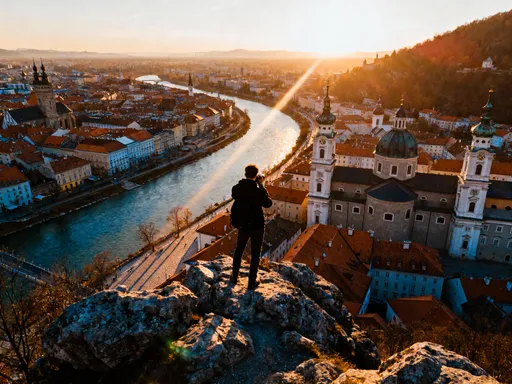
Hobart’s Hidden Corners: Where Street Photography Comes Alive
You know that feeling when a city just speaks to your camera? Hobart does that. Tucked away in Tasmania, this quiet port town surprised me with its raw, unfiltered charm. Forget polished tourist spots—here, every alley, weathered wall, and morning market tells a story. I came for the scenery, but stayed for the soulful street scenes. If you're chasing authentic moments through your lens, Hobart’s urban heartbeat is waiting. It’s not a city of grand monuments or flashing lights, but one where life unfolds quietly, naturally, and beautifully. In its stillness, there is movement. In its simplicity, depth. For street photographers seeking truth over spectacle, Hobart offers a rare gift: the chance to capture life as it truly is.
The Quiet Pulse of a Southern City
Hobart, the capital of Tasmania, pulses with a rhythm unlike any other Australian city. Nestled between the broad curve of the Derwent River and the looming presence of kunanyi / Mount Wellington, it feels both grounded and elevated—physically and emotionally. With a population just over 250,000, Hobart retains the intimacy of a coastal village while offering the cultural richness of a capital. This compact scale is a gift for street photographers. Unlike sprawling metropolises where energy feels fragmented, Hobart’s small footprint allows for deep immersion. You can walk from the waterfront to the foothills in under an hour, passing through neighborhoods that each carry their own distinct voice.
What makes Hobart especially compelling is how seamlessly nature and urban life coexist. The mountain watches over the city like a silent guardian, its face shifting with the weather—sometimes shrouded in cloud, other times glowing in alpine light. The river reflects the sky, the boats, the slow dance of tides. These natural elements don’t just frame the city; they shape its mood. Street photography here isn’t just about people or architecture—it’s about atmosphere. A fisherman coiling rope at dawn, a cyclist pausing at a hillside lookout, a cat curled on a sunlit doorstep—each moment is layered with context. The city breathes slowly, and that slowness invites observation.
Because Hobart is not overrun by mass tourism, its streets retain authenticity. There are no crowds pressing through narrow lanes, no vendors shouting over one another. Life unfolds at its own pace. This makes it easier to notice details: the way light falls across a painted door, the texture of moss on a stone wall, the sound of boots on wet cobblestones. For photographers, this means more opportunities to capture candid, unposed moments. There’s no need to compete for a shot. Instead, you’re invited to wait, watch, and respond. In a world where so much feels staged or filtered, Hobart offers something increasingly rare—genuine presence.
Salamanca Place: Culture in the Cracks
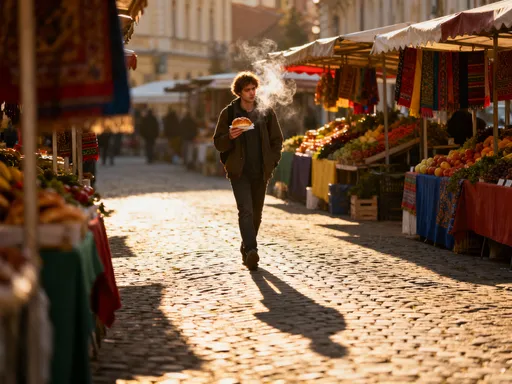
If Hobart has a cultural heartbeat, it beats strongest in Salamanca Place. Lined with 19th-century sandstone warehouses, this historic precinct has transformed from a working dock into a vibrant hub of art, food, and community. Every Saturday, the Salamanca Market draws locals and visitors alike, spilling across the cobblestones with handmade crafts, fresh produce, and live music. But for street photographers, the magic isn’t just in the market’s peak hours—it’s in the quiet moments before and after, when the light is soft and the city wakes up.
The sandstone buildings, weathered by salt and time, offer endless textural possibilities. Early morning light, low and golden, sweeps across the walls, highlighting cracks, carvings, and layers of paint. This is the perfect time for close-up photography—capturing the grain of wood on a stall, the steam rising from a coffee cup, or the focused hands of a potter arranging her wares. These small details tell larger stories about craftsmanship, tradition, and daily life. A wrinkled apron, a dog sleeping under a table, a child reaching for a sample—each frame adds to the narrative of this living, breathing place.
Street performers add another layer of visual interest. A cellist plays under an archway, her music curling into the air like smoke. A mime stands perfectly still, then bursts into motion, drawing laughter from passersby. These moments are fleeting, but they’re rich with emotion and expression. The key is patience—waiting for the right gesture, the perfect alignment of light and subject. Unlike posed portraits, street photography thrives on spontaneity. In Salamanca, that spontaneity is abundant. It’s also important to be respectful. A nod, a smile—small acknowledgments go a long way in building trust and ensuring your presence feels welcome.
Battery Point: Time Stands Still
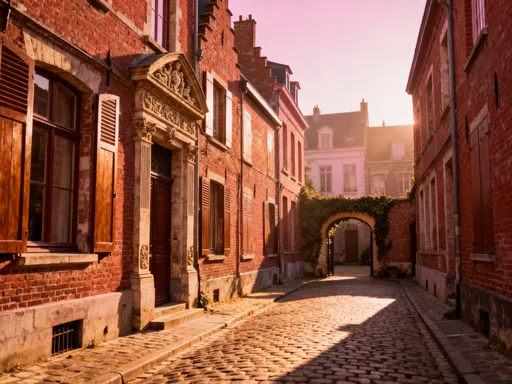
A short walk from Salamanca, Battery Point feels like stepping into another century. This preserved 19th-century neighborhood winds along the water’s edge, with narrow lanes, stone steps, and cottages draped in ivy and climbing roses. It’s one of Hobart’s oldest residential areas, and its charm lies in its stillness. While other parts of the city buzz with activity, Battery Point moves at the pace of tides and seasons. For photographers, it offers a different kind of street photography—one focused on atmosphere, architecture, and the poetry of quiet.
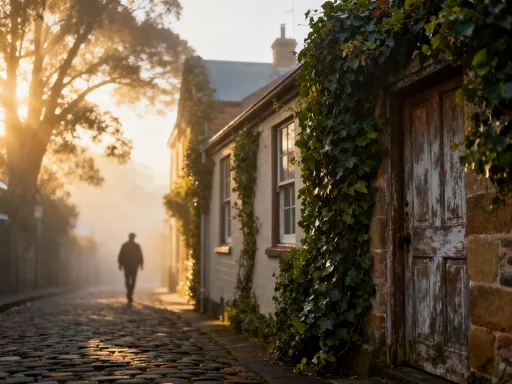
Dawn is the most powerful time here. Fog often lingers in the hollows, wrapping gardens and fences in soft grey. Windows glow with warm light as residents begin their day. A kettle whistles. A door creaks. These are not the loud moments that demand attention, but the subtle ones that linger in memory. Street photography doesn’t always require people. Sometimes, the absence of figures speaks louder. An empty chair on a porch, a row of boots by the door, a cat watching from a windowsill—these images evoke presence without showing it directly.
Architectural details abound. Doorways with wrought-iron knockers, leadlight windows, slate roofs slick with rain—each element invites a closer look. Using natural frames, like an arched gate or a tree branch overhead, can add depth and focus to your compositions. Reflections in puddles or glass panes double the visual interest, turning a simple scene into something dreamlike. The key is to move slowly, to let your eyes adjust to the quiet. In a world that values speed and volume, Battery Point reminds us that beauty often lives in stillness. For photographers, that stillness is not emptiness—it’s fullness held in reserve.
North Hobart: Color, Culture, and Contrast
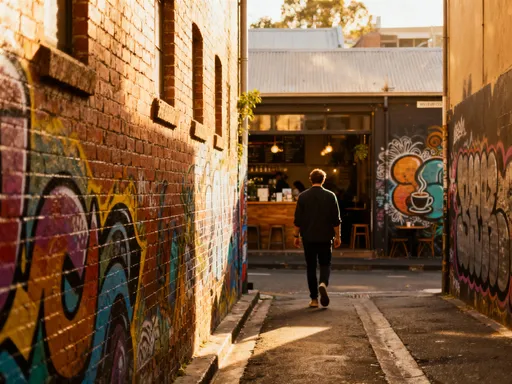
Just a few kilometers north of the center, the neighborhood of North Hobart pulses with a different energy. Once a quiet residential area, it has evolved into a cultural melting pot, known for its diverse restaurants, independent bookshops, and vibrant street art. Here, the city’s creative spirit feels most alive. Murals cover entire building facades, their colors bold and their messages layered. A giant wombat peers down from a brick wall. A cascade of native flowers blooms across a laneway. These artworks aren’t just decoration—they’re statements, conversations, celebrations.
For street photographers, North Hobart offers rich opportunities to explore contrast. Old cottages sit beside modern cafes. A grandmother walks her dog past a neon-lit ramen bar. A busker plays folk songs while a delivery scooter zips by. These juxtapositions create visual tension and narrative depth. The challenge is to capture them without reducing them to clichés. It’s not about documenting “old vs. new” in a simplistic way, but about finding harmony in difference. A well-composed shot might include a traditional lace curtain in the foreground, a graffiti-covered wall behind it, and a child’s scooter leaning against the step—three elements that tell a story about time, place, and people.
Outdoor dining areas are especially dynamic. In the late afternoon, tables fill with friends sharing meals, dogs resting under chairs, and waitstaff moving between tables with trays of wine. These scenes are full of motion and interaction. To capture them effectively, use a slightly faster shutter speed to freeze gestures, or a slower one to suggest movement. Pay attention to light—how it filters through trees, reflects off glass, or catches the steam from a hot dish. And always be mindful of privacy. A candid laugh is one thing; a close-up of someone eating is another. Respect the boundary between observation and intrusion.
Waterfront Whispers: The Working Port’s Rhythm
While parts of Hobart’s waterfront have been redeveloped for tourism, much of it remains a working port. This duality is part of its power. On one side, sleek yachts dock near modern galleries. On the other, fishing boats unload their catch, ropes creak, and gulls circle overhead. This is where the city earns its living, and where street photography can take on a deeper, more human dimension. It’s not about postcard views—it’s about dignity, labor, and routine.
Dawn is the ideal time to visit. The air is crisp, the light soft and silvery. Fishermen in waterproof gear move with practiced ease, sorting nets, stacking crates, calling out to one another. Their hands tell stories—calloused, scarred, capable. A close-up of those hands, perhaps holding a silver fish or coiling thick rope, can convey more than a full-body portrait ever could. Reflections in puddles or wet decks double the impact, turning a simple scene into something symbolic. The water itself becomes a canvas—ripples from a departing ferry, the slow bob of buoys, the mirror image of a crane against the sky.
Street photography at the working waterfront is not about capturing drama. There are no grand events, no staged moments. Instead, it’s about honoring the ordinary. A man sipping tea from a thermos. A dog waiting by a truck. A clipboard with scribbled notes. These quiet details form the backbone of daily life. They remind us that cities are not just made of buildings and streets, but of routines, relationships, and resilience. When photographing workers, it’s essential to be respectful. A simple “mind if I take a photo?” goes a long way. If the answer is no, accept it gracefully. The best images are not taken—they are given.
Weather as a Storyteller
Tasmania’s weather is famously unpredictable. One moment, the sun glints off the river; the next, a cold front rolls in, shrouding the city in mist. For some travelers, this might be a nuisance. For photographers, it’s a gift. Weather is not a backdrop—it’s a character in the story. Rain, fog, wind, and sudden sunbreaks transform familiar scenes into something new, often more powerful. A wet street becomes a mirror, doubling the world above. Low clouds press down on rooftops, creating a sense of intimacy. A burst of sunlight cuts through grey, illuminating a single doorway or a child’s umbrella.
Shooting in soft, diffused light—common on overcast days—reduces harsh shadows and brings out texture. This is ideal for street photography, where detail matters. Rain-soaked walls glisten, cobblestones darken, and clothing takes on richer tones. Reflections in puddles can turn a simple alley into a surreal composition. Fog simplifies scenes, stripping away distractions and focusing attention on shape and form. A lone figure walking through mist on a footpath becomes a universal image of solitude and journey.
Practical preparation is key. Waterproof gear for your camera, layers for yourself, and a willingness to embrace discomfort. Some of the most atmospheric shots are taken when others have gone inside. But the reward is worth it. “Bad” weather often produces the most memorable images—not because they’re technically perfect, but because they feel true. They capture the mood of a place, not just its appearance. In Hobart, where the climate shapes daily life, photographing the weather is not optional. It’s essential.
Ethics and Authenticity in the Frame
Street photography walks a fine line between observation and intrusion. In a small, close-knit city like Hobart, that line matters even more. People are not props. They are neighbors, workers, parents, artists. Capturing their lives requires more than technical skill—it demands empathy. The question is not just “can I take this photo?” but “should I?” There is a difference between documenting life and exploiting it. A photo of a homeless person sleeping in a doorway might win awards, but if it strips away dignity, it fails ethically.
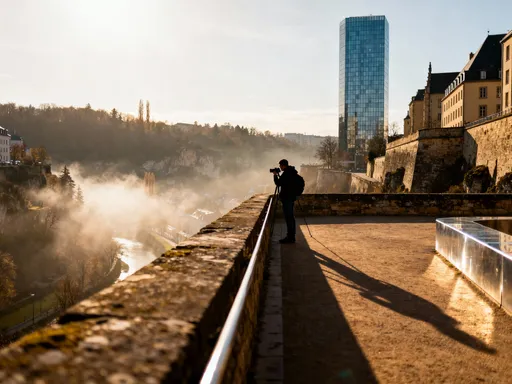
Consent is not always possible in street photography, but respect always is. A smile, a nod, a moment of eye contact can turn a stranger into a collaborator. If someone objects, delete the photo without argument. Some moments are not meant to be captured. Other times, waiting is the better choice—letting a scene unfold naturally rather than forcing a shot. The best street photographs feel inevitable, not intrusive.
Authenticity also means being honest with yourself about your intentions. Are you photographing to understand, or to impress? Are you showing truth, or just chasing contrast and drama? Reviewing your work with this lens can be uncomfortable, but it’s necessary. The goal is not just to make strong images, but to make responsible ones. In Hobart, where life moves slowly and people know their neighbors, that responsibility feels especially clear. Photography can be a form of care—a way of saying, “I see you. I value this moment.” When done with humility and heart, it becomes not just art, but connection.
Hobart doesn’t shout. It whispers—in creaking docks, in alleyway art, in the quiet of a morning street. For photographers, it’s a lesson in patience and presence. The best shots aren’t staged; they’re found in the in-between moments. This city proves that powerful stories hide in plain sight, if you’re willing to look. Pick up your camera, walk slowly, and let Hobart reveal itself—one frame at a time. There will be no grand announcements, no flashing signs. Just the soft click of the shutter, and the quiet joy of seeing what others might miss. In a world that moves too fast, Hobart invites you to slow down, breathe, and truly see.