You Won’t Believe These Hidden Gems in Antigua, Guatemala
Antigua, Guatemala, is more than just cobblestone streets and colorful markets—it’s a gateway to unforgettable views waiting to be discovered. I’ve explored its corners to find the best spots where beauty meets authenticity. From misty mountain lookouts to quiet rooftops with volcano panoramas, the real magic lies in how you see it. This isn’t just about where to go—it’s about experiencing Antigua’s scenery like a local, with timing, tricks, and a few secret paths most tourists miss.
Why Antigua’s Landscape Deserves a Closer Look
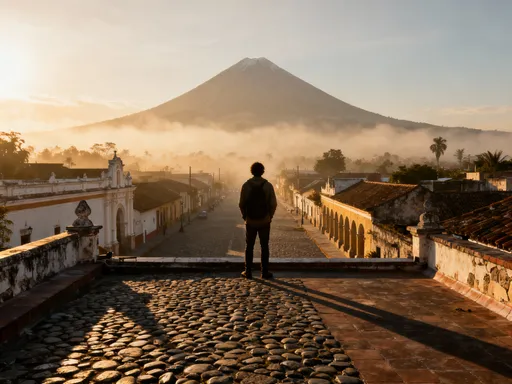
Antigua sits cradled in the highlands of central Guatemala, a city shaped as much by nature as by history. Surrounded by three towering volcanoes—Agua, Acatenango, and Fuego—its geography creates a dramatic stage where human craftsmanship and natural grandeur coexist. At 1,530 meters (about 5,000 feet) above sea level, the city enjoys a mild, spring-like climate year-round, but it’s the elevation that truly enhances the visual experience. Layers of terrain unfold before the eye: red-tiled rooftops cascade down sloping streets, framed by distant volcanic peaks often veiled in morning mist.
What sets Antigua apart is not just the presence of these natural wonders, but how they are integrated into daily life. Unlike flat urban centers where skyscrapers dominate, Antigua’s low-rise colonial architecture ensures unobstructed sightlines. The preserved 16th-century grid layout, with its narrow streets and arched passageways, funnels the gaze upward and outward, naturally directing attention toward the horizon. This interplay between built environment and natural backdrop creates depth, contrast, and constant visual surprise.
Most visitors capture the same postcard scenes: the bell towers of La Merced against Agua Volcano, or a flower-laden balcony with a distant plume of smoke from Fuego. Yet there is a profound difference between seeing these sights through a lens and experiencing them in person. The crisp mountain air, the shifting light at different hours, the sound of church bells echoing across stone courtyards—these sensory details are lost in photographs but are essential to truly understanding the place. Immersive viewing means slowing down, observing transitions, and noticing how the landscape changes with time and weather.
Choosing the Right Vantage Points for Maximum Impact
Not all viewpoints are created equal. While many travelers head straight for Cerro de la Cruz, one of the most photographed spots in Antigua, the reality can be underwhelming. Though it offers a classic panoramic vista, the site has become increasingly commercialized, with souvenir stalls and crowds that arrive en masse during peak hours. The path up is steep and uneven, and by mid-morning, the platform is often packed, diminishing both comfort and solitude. More importantly, the angle, while broad, flattens the cityscape, making it difficult to appreciate subtle elevations and architectural details.
A more rewarding alternative is El Mirador, a lesser-known lookout located slightly north of the city center. This quiet hilltop offers a more dynamic perspective, with layered rooftops leading the eye toward Agua Volcano in the distance. Because it’s not as heavily promoted, foot traffic remains low, especially in the early morning. The trail is well-marked but requires sturdy footwear, as parts are loose with gravel. What makes El Mirador special is its sense of discovery—few tour groups include it, and locals often pass by without stopping, making it feel like a personal find.
Another overlooked category of vantage points includes the terraces of local churches. Parroquia San Francisco, for example, has an accessible upper level that provides a sweeping eastward view, particularly stunning at sunset when the light bathes the city in warm gold. Unlike commercial observation decks, these spaces are not designed for tourism, so visitors must be respectful of their religious and community significance. A quiet demeanor, modest dress, and a small donation if requested go a long way in fostering goodwill.
To identify such hidden spots, travelers can use digital tools wisely. Map applications with satellite view can reveal open rooftops, undeveloped lots, or elevated walkways just beyond the historic center. Look for clusters of antennas or satellite dishes—they often indicate upper-level access points. Locals, too, offer subtle cues: a staircase left unlocked, a vendor pointing toward a side alley, or a cluster of chairs on a rooftop at twilight. These quiet signals suggest spaces where residents gather to enjoy the view, and with polite inquiry, visitors may be welcomed to share the moment.
Mastering Timing: Light, Weather, and Crowd Flow
One of the most transformative experiences in Antigua is witnessing sunrise from an elevated position. As dawn breaks, the silhouette of Volcán de Agua emerges from the shadows, gradually illuminated by soft pink and golden light. The contrast between the darkened city below and the glowing peak creates a serene, almost sacred atmosphere. This brief window, lasting no more than 20 minutes, offers the clearest visibility before morning humidity begins to rise. Fuego Volcano, often active, may emit a faint plume during these hours, adding movement and drama to the stillness.
The dry season, which runs from November to April, provides the most favorable conditions for unobstructed views. During these months, rainfall is minimal, skies are clearer, and the air carries less moisture, reducing haze. Mornings are typically crisp and transparent, making them ideal for photography and long-distance observation. In contrast, the rainy season (May to October) brings frequent afternoon showers and increased cloud cover, which can obscure the volcanoes by midday. However, this period also has its rewards: after a storm, the air is freshly washed, and fleeting breaks in the clouds can create breathtaking moments of clarity.
Equally important is understanding crowd patterns. Most guided tours arrive in Antigua between 9:00 and 10:30 a.m., converging on major landmarks like Cerro de la Cruz and the central park. By planning visits to key viewpoints in the late afternoon or early evening, travelers can avoid congestion and enjoy a more peaceful experience. Late afternoon light also enhances textures—the warm tones highlight stonework, adobe walls, and flower petals, adding richness to the visual tapestry. Evenings bring a different kind of beauty: as the city lights come on, a soft glow rises from the streets, contrasting with the darkening sky and the occasional flicker of Fuego’s activity in the distance.
Elevate Your Perspective: Rooftop Cafés and Hidden Terraces
For those who prefer comfort alongside scenery, Antigua offers a selection of rooftop cafés and guesthouses with panoramic seating. These spaces provide a relaxed way to absorb the city’s beauty without strenuous hiking. One such example is a small, family-run café near the Santa Catalina Arch, where wooden tables are arranged on a flat roof overlooking the central valley. Guests can sip locally grown coffee while watching the light shift across the volcanoes. Because it’s not listed in major travel guides, it remains a favorite among long-term visitors and expatriates.
Another option is a community hostel tucked in a quiet neighborhood west of the cathedral. Its rooftop terrace, open to both guests and day visitors, features cushioned seating and shaded corners perfect for reading or quiet reflection. From here, the view includes not only the volcanoes but also the daily rhythms of local life—children playing in courtyards, women hanging laundry on lines, and the occasional rooster wandering a nearby yard. These human details add warmth and authenticity to the landscape, transforming it from a static postcard into a living scene.
When visiting such spaces, it’s important to observe local etiquette. Many rooftops are part of private homes or small businesses, so visitors should always ask permission before ascending. A small purchase, such as a drink or snack, is a courteous way to support the owners. Noise should be kept to a minimum, especially in residential areas, and flash photography avoided during twilight hours. Respecting these unspoken rules ensures that such spaces remain open and welcoming to future guests.
Some of the most memorable moments come not from famous lookouts but from spontaneous discoveries. A kind shopkeeper might invite you up to their roof after a conversation about the weather. A guesthouse owner might point out a hidden stairway leading to a shared terrace. These invitations, born of genuine connection, often lead to the most authentic experiences. They remind us that Antigua’s beauty is not just in its views, but in the generosity of its people.
Walking Routes That Reveal Antigua’s Visual Layers
To fully appreciate Antigua’s scenery, one must move through it thoughtfully. A well-planned walking route can unfold the city like a story, revealing vistas gradually and building anticipation. One such path begins at the Palacio de los Capitanes Generales in the central park and follows Calle de las Escuelas westward. As the street climbs slightly, the view behind opens up, offering glimpses of church towers framed by blue sky. At the intersection with 5a Avenida, a narrow alley leads to a small plaza where a colonial fountain sits beneath an archway—a quiet pause before the next ascent.
Continuing north on Calle del Arco, the route approaches the Santa Catalina Arch, one of Antigua’s most iconic landmarks. From here, looking back southeast, the entire city spreads out in a cascade of red roofs, with Agua Volcano rising majestically in the background. The arch itself serves as a natural frame, drawing the eye toward the horizon. This kind of architectural framing is common throughout the city—doorways, windows, and passageways are positioned in ways that highlight distant peaks, suggesting that the original planners designed the city with views in mind.
Another rewarding route begins in the farmers’ market and winds through the residential neighborhood of El Palacio. This area, less visited by tourists, features narrow cobblestone lanes that rise steadily toward the northern edge of town. Along the way, colorful doorways, potted plants, and hand-painted signs add texture and charm. At the top, a small community garden offers an unobstructed view of Acatenango and Fuego. Because this path is used primarily by locals, it provides a genuine sense of place, free from the performance often found in more commercialized zones.
Walking with intention allows the traveler to notice transitions—how sunlight moves across a wall, how shadows lengthen in the afternoon, how the sound of bells carries differently at various elevations. These subtle shifts are part of Antigua’s visual language. By slowing down and observing them, visitors engage not just with the scenery, but with the rhythm of daily life.
Tools and Techniques for a Richer Visual Experience
Capturing Antigua’s beauty doesn’t require professional equipment, but a few simple techniques can enhance both photography and direct observation. When photographing the volcanoes, try to include a foreground element—a colonial arch, a blooming bougainvillea, or a weathered wooden door. This adds depth and context, transforming a distant peak into a story. Natural light is your greatest ally: early morning and late afternoon provide soft, directional lighting that emphasizes texture and dimension, while midday sun tends to flatten images with harsh contrast.
Yet the most powerful tool is not a camera, but presence. There is great value in putting the phone away and simply looking. Mindful observation means engaging all the senses—noticing the coolness of the stone under your hand, the scent of coffee drifting from a courtyard, the distant chime of a church bell. These details anchor the visual experience in reality, creating memories that last far longer than any photograph. Try spending five uninterrupted minutes at a single viewpoint, allowing your eyes to adjust and your mind to absorb the full scene.
For those who wish to see further, a small pair of binoculars can reveal distant details: the plume of smoke from Fuego, the contours of Acatenango’s rugged slopes, or birds circling above the treetops. Polarized sunglasses reduce glare on stone and glass, making colors appear richer and contrasts sharper. A lightweight notebook or sketchpad can also deepen engagement, allowing you to record impressions, jot down observations, or sketch a favorite doorway. These low-tech tools encourage slower, more thoughtful interaction with the environment.
Technology, when used wisely, supports rather than distracts. Map apps can help locate lesser-known paths, and weather forecasts guide timing decisions. But the goal is not to optimize every moment, but to create space for discovery. Sometimes the best views come when you’re not looking for them—a sudden opening in the clouds, a child waving from a balcony, a patch of sunlight on a cobblestone street. These unplanned moments are the soul of travel.
Putting It All Together: Crafting Your Own Scenic Journey
The most meaningful way to experience Antigua is to design a personal itinerary that combines timing, location, and mindful movement. Begin with an early morning visit to El Mirador or a quiet rooftop to witness sunrise. Spend the late morning exploring a curated walking route, allowing the city to unfold at a natural pace. After a light lunch at a local café, retreat to a shaded terrace for rest and reflection. In the late afternoon, revisit a favorite viewpoint to see how the light has changed. End the day with a slow walk through the central park as the streetlights come on and the air cools.
This rhythm—active exploration balanced with quiet observation—mirrors the character of Antigua itself. The city does not shout its beauty; it reveals it gradually, to those who pay attention. By stepping off the well-trodden path, respecting local spaces, and embracing the unexpected, travelers can move beyond checklist tourism and form a deeper connection with the place.
Antigua invites us to see more deliberately. Its layered landscapes, shaped by centuries of history and nature, reward patience and curiosity. Whether you’re standing atop a quiet hill, sipping coffee on a hidden roof, or pausing in a sunlit alley, the experience is not just about what you see, but how you see it. In a world of rushed itineraries and filtered images, Antigua offers a rare gift: the chance to truly look, to be present, and to remember why we travel in the first place.