You Won’t Believe These Hidden Cultural Gems in Cairo
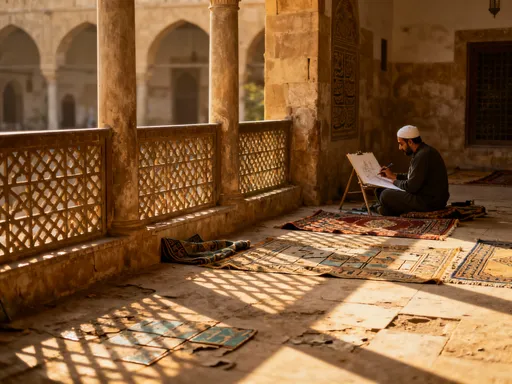
Cairo is more than pyramids and bazaars—trust me, I’ve walked its streets far beyond the tourist trails. Tucked away from the crowds are intimate cultural spaces where history whispers through ancient stones and local art breathes new life into tradition. I stumbled upon these hidden spots by chance, and each felt like a secret handshake from the city. If you’re craving authentic experiences that guidebooks often miss, let me take you somewhere real. These are not grand monuments with long ticket lines, but quiet corners where culture lives and breathes—where artists sketch by candlelight, where calligraphy dances on restored walls, and where music echoes through centuries-old archways. This is Cairo as locals know it: layered, alive, and deeply human.
Beyond the Tourist Trail: Cairo’s Untold Cultural Side
Cairo’s global image is shaped by the awe-inspiring silhouette of the pyramids, the bustling energy of Khan el-Khalili, and the mighty flow of the Nile. These landmarks are undeniably magnificent, but they represent only one layer of a city that has been a cultural crossroads for over a thousand years. Beyond the postcard views lies a quieter, more personal Cairo—one where heritage is not preserved behind glass but lived in daily rhythms, celebrated in small gatherings, and reimagined in contemporary art. It is in neighborhoods like Darb al-Ahmar, Garden City, and Rod El Farag that the city’s soul reveals itself, not through spectacle, but through subtlety.
For many visitors, Cairo remains a checklist of must-see sites. But those who linger discover that the city’s true richness lies in its layered history and resilient cultural fabric. The call to prayer blends with the chatter of neighbors on balconies; centuries-old fountains still provide water in narrow alleys; and artisans continue age-old crafts in workshops unchanged for generations. These moments are not staged for tourists—they unfold naturally, inviting quiet observation and respectful engagement. The shift from sightseeing to cultural immersion begins when we stop chasing icons and start listening to the city’s quieter voices.
What makes these hidden spaces so powerful is their authenticity. Unlike polished museums or curated tours, they offer unfiltered access to Egypt’s living traditions. A woman grinding spices in a sunlit courtyard, a calligrapher teaching students in a restored madrasa, or a jazz ensemble rehearsing in a converted 19th-century villa—these are the real stories of Cairo. They remind us that culture is not frozen in time but constantly evolving, shaped by those who inherit it and reimagine it. For the thoughtful traveler, especially one seeking meaningful connection, these spaces offer something far more lasting than a photograph.
The Hidden Art Hubs of Downtown and Zamalek
If you’re searching for the pulse of Cairo’s contemporary art scene, look beyond the grand halls of the Museum of Modern Egyptian Art and into the side streets of Downtown and the tree-lined avenues of Zamalek. Here, tucked between old European-style buildings and quiet cafés, are independent art spaces that have become incubators for Egypt’s creative future. One of the most influential is the Townhouse Gallery, located in a restored 19th-century mansion in Downtown. Though it has faced challenges in recent years, its legacy endures as a pioneer of grassroots cultural exchange. The gallery’s intimate scale—exhibitions often fill just a few rooms—creates a sense of closeness, as if you’re being let into a private conversation among artists.
Townhouse was more than a gallery; it was a community hub where painters, photographers, and performance artists could experiment freely. Its programming emphasized dialogue—between generations, between disciplines, and between local and international voices. Visitors might attend a poetry reading one evening, a film screening the next, and a workshop on traditional printmaking the following week. What made it special was not its size, but its spirit: inclusive, bold, and deeply rooted in Cairo’s urban life. Though its physical presence has changed, its influence lives on in the many artists it supported and the model it set for independent cultural spaces.
Zamalek, the island neighborhood on the Nile, hosts several smaller galleries that continue this tradition. Places like Gypsum Gallery and Cairo Canvas offer rotating exhibitions that spotlight emerging Egyptian artists—many of whom explore themes of identity, memory, and social change. These venues are unpretentious, often run by artists themselves, and welcoming to curious visitors. You won’t find crowds or ticket lines, but you will find sincerity. The staff often speak English and are happy to discuss the work, offering insights into the artist’s inspiration or the story behind a particular piece.
Visiting these spaces requires a shift in expectation. There are no audio guides or souvenir shops. Instead, you’re invited to slow down, observe closely, and engage. The best time to visit is during an opening reception, usually on Thursday or Friday evenings, when artists are present and the atmosphere is lively yet intimate. Entry is often free or by small donation, reflecting their nonprofit ethos. These galleries are not trying to impress—they’re trying to connect. For a traveler seeking authenticity, that connection is priceless.
Reviving the Past: Historic Mansions and Cultural Restoration Projects
Walking through certain parts of old Cairo, you might catch sight of a grand wooden door, slightly ajar, revealing a sunlit courtyard with flowering jasmine and a fountain at its center. These are not private homes closed to the public, but restored historic mansions—testaments to Cairo’s architectural elegance and cultural endurance. One of the most beautiful examples is Bayt al-Suhaymi, a 17th-century merchant’s house in the Darb al-Ahmar district. Built during the Ottoman period, the house features intricate mashrabiya screens, carved stucco walls, and multiple levels connected by winding staircases. What was once a private residence is now a cultural center, hosting workshops in traditional crafts, music performances, and guided tours that bring its history to life.
Bayt al-Suhaymi is more than a museum—it is a living space where heritage is practiced, not just displayed. Visitors can watch artisans demonstrate woodworking, metal inlay, or textile weaving using techniques passed down for generations. Children from the neighborhood attend summer programs here, learning calligraphy or Arabic music. The house is managed by conservation experts and local partners who believe that preservation is not about freezing a building in time, but about giving it new purpose. By opening its doors to the community and to visitors, Bayt al-Suhaymi becomes a bridge between past and present.
Another remarkable example is the Sabil-Kuttab of Abd al-Rahman Katkhuda, a beautifully restored 18th-century foundation near Bab Zuweila. Combining a public water fountain (sabil) on the ground floor with a Quranic school (kuttab) above, this structure reflects the social values of its time—charity, education, and public service. Its façade is adorned with delicate stonework and inscriptions in thuluth script. After years of neglect, it was carefully restored by the Aga Khan Trust for Culture, which has led several such projects in Islamic Cairo. Today, it stands not only as an architectural gem but as a symbol of how historic preservation can revitalize entire neighborhoods.
These restoration efforts are part of a broader movement to protect Cairo’s cultural heritage from decay and neglect. Many historic buildings had fallen into disrepair, threatened by pollution, overcrowding, and lack of funding. But through partnerships between international organizations and local experts, dozens have been brought back to life. The impact goes beyond architecture: restored buildings attract visitors, create jobs, and inspire pride among residents. For travelers, visiting these sites offers a deeper understanding of Cairo’s history—not as a distant era, but as a living tradition that continues to shape the city.
The Soul of Islamic Cairo: Forgotten Mosques and Madrasas
Islamic Cairo is often described as an open-air museum, and for good reason. Its narrow streets are lined with mosques, madrasas, and caravanserais, many dating back to the Mamluk and Fatimid periods. While some, like Al-Azhar Mosque, draw constant crowds, others remain peaceful and overlooked, offering a chance to experience spiritual and architectural beauty without distraction. One such place is the Madrasa of Sultan Barquq, built in the late 14th century near Bab al-Nasr. Unlike the grand mosques with their towering minarets and vast courtyards, this madrasa is modest in scale but rich in detail. Its stone carvings, geometric mosaics, and serene prayer hall create an atmosphere of quiet contemplation.
What makes these lesser-known religious sites so special is their sense of intimacy. You can sit on a cushioned bench, listen to the echo of footsteps on marble, and watch sunlight filter through stained glass. There are no tour groups, no loud guides, just the occasional local worshipper or student of architecture. These spaces were built not only for prayer but for learning—many once housed scholars who taught theology, law, and science. Today, some still serve educational purposes, while others are preserved as historical monuments. But all retain a sense of sacred calm, a reminder of the intellectual and spiritual legacy of Islamic Cairo.
Another hidden gem is the Mosque of Umar Ibn Sulayman, tucked away in a quiet alley near Al-Hussein Square. Built in the 19th century, it features a striking blend of Ottoman and Cairene styles, with a central dome, arched windows, and a peaceful courtyard shaded by palm trees. The interior is decorated with floral frescoes and gilded calligraphy. Because it is not on the main tourist path, it remains a place of genuine use and quiet beauty. Visitors are welcome, provided they dress modestly and remove their shoes before entering. The caretakers are often happy to share the history of the mosque, speaking with quiet pride about its past and present.
Exploring these sites requires a respectful approach. They are not attractions in the conventional sense, but active places of worship and community. Photography should be discreet, voices kept low, and visits timed to avoid prayer hours. But for those who observe these simple courtesies, the reward is profound: a chance to experience Cairo’s spiritual heart, not as a spectator, but as a quiet guest. In these spaces, history is not explained—it is felt.
Local Theaters and Music Spaces Off the Radar
Cairo has long been a center for Arab theater, cinema, and music, but much of its creative energy flows through small, independent venues that rarely appear in travel guides. These are not grand opera houses or commercial cinemas, but intimate spaces where art is raw, personal, and deeply connected to Egyptian life. One such place is the Sakiat Sitti Cultural Center, located in a restored historic building on the banks of the Nile. Run by the Bibliotheca Alexandrina’s outreach program, it hosts experimental theater, acoustic music nights, and poetry readings. The stage is small, the seating is close, and the connection between performer and audience is immediate.
On any given evening, you might hear a Sufi music ensemble performing devotional songs, their voices rising in haunting harmony, or a young playwright debuting a work about family, memory, and change. These performances are not polished for mass appeal—they are works in progress, often provocative, always honest. What unites them is a commitment to cultural expression that reflects real Egyptian experiences. For visitors, attending a show here is like being invited into a private artistic circle, one that values depth over spectacle.
Another hidden gem is the Diwan Bookstore & Cultural Space in Zamalek, which, beyond its shelves of Arabic and English literature, hosts regular music nights and literary salons. These gatherings draw a mix of locals—writers, academics, artists—who come not for entertainment, but for exchange. A recent evening featured a qanun player performing classical Arabic pieces, followed by a discussion on the role of music in social resilience. The atmosphere was warm, intellectual, and unhurried. Events like these are not advertised widely; they spread by word of mouth, through community boards, or social media groups dedicated to Cairo’s cultural life.
For travelers, finding these events requires curiosity and a willingness to ask around. Hotel concierges may not know about them, but local artists, gallery staff, or bookstore employees often do. The key is to express genuine interest—not as a tourist checking off experiences, but as someone eager to listen and learn. When attending, modest dress and quiet respect are essential. Applause is warm but never excessive; the focus is on the art, not the audience. These spaces thrive because they are protected from commercialization, and visitors who honor that spirit are welcomed as part of the moment.
Navigating the City: How to Discover These Places Yourself
Finding Cairo’s hidden cultural gems is not about following a map, but about cultivating awareness and connection. While guidebooks and apps can point you in the right direction, the most rewarding discoveries often come from conversation. Start by talking to local artists, gallery staff, or cultural workers—you’ll find many are eager to share their favorite spaces if approached with respect and sincerity. A simple question like, “Where do you go to experience real Cairo?” can open unexpected doors. Many of these venues are not heavily promoted online, relying instead on community networks and word of mouth.
Another effective strategy is to visit cultural centers or bookstores that host events. Places like Diwan, the American University in Cairo’s downtown campus, or the French Institute often post flyers or announcements for upcoming performances, exhibitions, or workshops. These listings are usually in Arabic, but staff are often bilingual and happy to help. Timing matters, too. Weekday afternoons are ideal for visiting historic sites without crowds, while Thursday and Friday evenings are best for catching art openings or music events. Avoid peak summer months if possible, as the heat can make walking difficult, though many indoor spaces remain comfortable and welcoming.
Transportation in Cairo can feel overwhelming, but it doesn’t have to be. The metro is clean, affordable, and safe, especially the newer lines. For harder-to-reach neighborhoods, consider hiring a local guide with expertise in cultural heritage. Unlike standard tour guides, these specialists focus on history, architecture, and community life, offering insights you won’t find in books. They can arrange access to restricted areas, introduce you to artists, and help navigate language barriers. Look for guides affiliated with reputable cultural organizations or universities to ensure authenticity and ethical practice.
Neighborhood safety is generally good in the areas discussed, especially during daylight hours. Islamic Cairo, Downtown, and Zamalek are well-patrolled and frequented by locals. Still, it’s wise to dress modestly, keep valuables secure, and stay aware of your surroundings. Most importantly, approach each visit with humility. These spaces are not performances for tourists—they are part of Cairo’s living culture. Ask permission before photographing people, speak quietly in religious sites, and support the community by purchasing art, books, or crafts when possible. When you engage with respect, you’re not just visiting—you’re participating.
Why These Hidden Spaces Matter: Preserving Culture Beyond Tourism
The hidden cultural spaces of Cairo are more than charming discoveries—they are vital threads in the city’s social and historical fabric. In an era of mass tourism and rapid urban change, they represent resistance to homogenization, offering alternatives to cookie-cutter souvenirs and crowded photo ops. They remind us that culture is not a product, but a process—one sustained by people, places, and daily acts of creativity and care. When travelers seek out these spaces, they do more than enrich their own experience; they contribute to the survival of local heritage.
Many of these venues operate on limited budgets, relying on donations, volunteer work, and small ticket sales. Visitor support—whether through attendance, purchases, or respectful engagement—helps sustain their programs and keep them accessible to the community. More than that, mindful tourism fosters mutual understanding. When a traveler listens to a Sufi chant in a 15th-century madrasa, or watches a child learn calligraphy in a restored mansion, a quiet exchange takes place—one that transcends language and nationality.
Yet these spaces remain vulnerable. Commercial development, pollution, and neglect threaten historic buildings, while independent artists face challenges in funding and visibility. The risk is not just physical loss, but cultural erasure—the fading of voices that have shaped Cairo for centuries. This is why responsible visitation matters. It is not enough to admire; we must also protect. That means choosing depth over speed, connection over consumption, and curiosity over convenience.
For the traveler, especially one seeking meaning and connection, Cairo’s hidden gems offer a different kind of journey—one measured not in sights seen, but in moments shared. They invite us to slow down, to listen, and to see the city not as a monument, but as a living story. In doing so, we become not just observers, but participants in the ongoing life of a great cultural capital. So the next time you plan a trip to Cairo, look beyond the pyramids. Step into a quiet courtyard, attend a small concert, or strike up a conversation with a local artist. You might just receive that secret handshake—and discover the Cairo that few ever see.