You Won’t Believe What’s Hiding in Punakha’s Local Markets
Nestled in the heart of Bhutan’s lush valleys, Punakha’s commercial zones offer far more than just shopping—they’re gateways to culture, tradition, and real daily life. I was surprised by how much storytelling happens in a simple market exchange, or how a roadside stall can serve as a hub for community and commerce. This isn’t just about buying souvenirs; it’s about connecting with a way of life. Let me take you through the practical, often overlooked side of Punakha’s bustling economic heart.
Arriving in Punakha: First Impressions of the Town’s Commercial Pulse
As you descend from the Dochula Pass, the air grows warmer and the landscape shifts from alpine ridges to terraced rice fields and dense subtropical forests. This transition marks your arrival into the Punakha Valley, one of Bhutan’s most fertile and historically significant regions. The first signs of commerce appear subtly—small roadside stalls selling ripe oranges, baskets of red rice, and steaming cups of butter tea. Unlike more tourist-heavy towns, Punakha maintains a grounded, functional character. Its commercial activity clusters organically around key landmarks, especially the majestic Punakha Dzong, which sits at the confluence of the Pho Chhu and Mo Chhu rivers. This fortress-monastery is not only a spiritual center but also a natural anchor for trade and public life.
Visitors typically access the town via the well-maintained Lateral Road, which connects Thimphu to eastern Bhutan. The final stretch into Punakha is a winding descent that opens into flat, fertile plains. Parking areas near the Dzong and the main bridge are commonly used by both locals and tourists, making them informal entry points to the market scene. It’s not unusual to see farmers unloading vegetables from pickup trucks or monks purchasing household items between prayers. The proximity of commerce to religious and administrative spaces reflects a deeply integrated way of life—one where spirituality, governance, and daily survival coexist seamlessly. There are no large shopping malls or international brands; instead, the economy thrives on small-scale, community-based trade that has changed little in decades.
What stands out immediately is the absence of aggressive tourism infrastructure. There are no souvenir kiosks crowding the sidewalks, no loud advertisements, and no pushy vendors. The commercial pulse of Punakha is steady, quiet, and purposeful. It serves the local population first, with visitors welcomed as respectful observers and participants. This authenticity is precisely what makes the experience so valuable. For the 30- to 55-year-old traveler—often a woman seeking meaningful, enriching experiences beyond typical tourist trails—Punakha offers a rare opportunity to witness how a traditional Himalayan town sustains itself through everyday commerce rooted in cooperation and cultural continuity.
The Main Bazaar: Where Daily Life and Trade Intersect
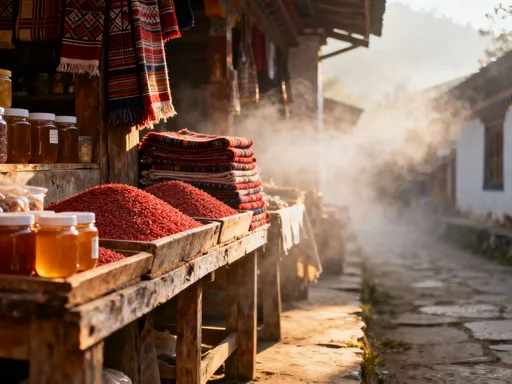
The heart of Punakha’s commercial life beats strongest in its main bazaar, a lively stretch of covered stalls and open-air vendors lining the central road. This is where farmers from surrounding villages bring their harvests, weavers display handcrafted textiles, and shopkeepers restock essentials ranging from kitchenware to school supplies. The market operates on a rhythm dictated by sunrise and season. By 7 a.m., the stalls are already active, with women in traditional kiras arranging pyramids of chilies, baskets of radishes, and heaps of fresh herbs. The air carries the scent of cumin, garlic, and wet earth—a sensory reminder of agriculture’s central role in this valley.
Stalls are organized informally but with clear patterns. The eastern end is dominated by fresh produce: organic vegetables grown without synthetic fertilizers, free-range eggs, and seasonal fruits like papaya and banana. In the center, textiles take prominence—colorful thikdus (scarves), handwoven bags, and lengths of fabric used to make the national dress. These items are often made by the vendors themselves or sourced from nearby weaving cooperatives. The western side caters to household needs: plastic buckets, cooking oil, candles, and simple tools. Prices are generally low by international standards, but they reflect fair compensation for labor in a cash-based economy. Most transactions are conducted in Bhutanese ngultrum, with Indian rupees also accepted in smaller denominations.
Bargaining is not the norm here. Unlike markets in other parts of South Asia, prices are usually fixed or adjusted only slightly based on the buyer’s relationship with the seller. A nod, a smile, or a shared word in Dzongkha goes further than haggling. This reflects a cultural value of mutual respect and trust. For foreign visitors, it’s important to approach purchases with humility and appreciation. Paying the stated price is not just polite—it’s a way of honoring the work behind each item. While a few shops near the Dzong now accept mobile payments or cards, the vast majority operate on cash alone. Travelers are advised to carry small bills to avoid awkward exchanges, especially when buying something as simple as a boiled egg or a packet of dried cheese.
Hidden Trading Corners: Beyond the Tourist Path
Just beyond the main bazaar, tucked beside temple courtyards and along the banks of the Mo Chhu River, lie the market’s quieter, less visible corners. These are not designed for tourists, yet they offer some of the most authentic glimpses into local economic life. Early in the morning, elderly women gather near the entrance of small shrines, selling bundles of prayer flags, incense sticks, and butter for temple lamps. These items are used in daily rituals, and the small trade in religious goods supports both spiritual practice and modest household incomes. The exchange is quiet, almost reverent, with money changing hands beneath fluttering prayer flags.
Further downstream, along a dirt path that follows the river, informal vendor zones emerge during market days. Farmers from remote villages set up temporary stalls on woven mats, offering goods not always seen in the central market: wild honey collected from forest hives, handmade bamboo tools, and medicinal herbs used in traditional Bhutanese medicine. These areas lack signage or fixed structures, but locals know exactly where to find them. The trade here is deeply seasonal—root vegetables in winter, fresh greens in spring, and mushrooms during the monsoon. It’s also highly localized; many items are bartered or sold on credit to trusted neighbors.
What makes these hidden corners special is their function as community hubs. They are places where news is shared, advice is given, and relationships are maintained. A woman buying rice might pause to ask after a sick relative; a farmer selling potatoes might arrange a ride home with a fellow villager. These interactions are as vital as the transactions themselves. For the thoughtful traveler, observing or respectfully participating in these exchanges offers a deeper understanding of how rural Bhutanese society sustains itself—not through grand systems, but through networks of trust, reciprocity, and quiet resilience. These spaces are not performative; they are real, lived economies that continue to thrive despite modernization pressures.
Local Products That Support the Economy
When visiting Punakha’s markets, certain products stand out not only for their quality but for their role in sustaining local livelihoods. Among the most significant is Bhutanese red rice, grown in the valley’s nutrient-rich soil and prized for its nutty flavor and high fiber content. Unlike imported white rice, red rice requires no chemical processing and is typically sold in cloth bags directly from farmers. Purchasing it supports smallholder agriculture and preserves traditional farming methods that align with Bhutan’s environmental values.
Equally important are handwoven textiles, particularly the kira (worn by women) and gho (worn by men). These garments are made on backstrap looms using natural dyes and intricate patterns that often carry regional or familial significance. Many weavers are women from rural households who balance textile production with farming and childcare. Their work is time-intensive—a single kira can take weeks to complete—but it provides a critical source of income. Buying authentic handwoven cloth directly from vendors ensures that artisans receive fair compensation and that this cultural heritage continues to be passed down.
Other locally made goods include raw honey, a natural product harvested from highland forests, and handmade crafts such as wooden bowls, woven baskets, and dzö (traditional leather pouches). These items are not mass-produced; each carries the mark of individual craftsmanship. For travelers, choosing to buy these goods over generic souvenirs is a meaningful way to contribute to the local economy. To ensure authenticity, look for signs of handmade work—slight irregularities in stitching, natural variations in color, or the vendor’s personal story about how the item was made. Avoid items that appear machine-made or overly polished, as these are often imported from outside Bhutan.
Transporting purchases back home is generally straightforward. Most items are lightweight and durable, and vendors are accustomed to wrapping goods in paper or cloth for safe travel. However, it’s wise to pack fragile or perishable items carefully, especially if flying with Druk Air, Bhutan’s national carrier, which allows limited checked baggage. By selecting meaningful, locally made products, travelers do more than collect mementos—they become part of a sustainable economic cycle that values people, tradition, and environmental balance.
Business Hours, Seasons, and Visitor Timing
Understanding the rhythm of Punakha’s markets enhances both the practical and emotional value of a visit. The commercial day begins early, with most vendors setting up by 6:30 a.m. and peak activity occurring between 8 a.m. and 11 a.m. This is when farmers bring their freshest produce, weavers arrive with new stock, and local households complete their daily shopping. By early afternoon, foot traffic slows significantly. Many stalls close by 2 p.m., especially on weekdays, as vendors return to their farms or homes. For travelers, arriving in the morning ensures the best selection and the most vibrant atmosphere.
Seasonal variations also play a crucial role. During the spring and autumn months—particularly around the Punakha Drubchen and Tsechu festivals—the market expands dramatically. Temporary stalls appear, artisans from other regions visit to sell specialty goods, and the entire town buzzes with heightened activity. These festivals are not only religious events but also major economic moments, drawing visitors from across Bhutan and creating a surge in trade. The energy is infectious, and the variety of goods on offer is unmatched at other times of year.
In contrast, the monsoon season (June to September) brings a noticeable lull. Heavy rains make travel difficult, especially for farmers from remote villages, and market attendance drops. Some vendors reduce their hours or suspend operations temporarily. While the market remains open, the selection is more limited, and the pace is slower. For travelers seeking tranquility, this can be a peaceful time to visit, but those hoping to experience the full vibrancy of Punakha’s commerce may prefer the drier, festival-rich months of March to May or September to November.
Weekends, particularly Sundays, tend to be busier than weekdays, as families from surrounding villages come to town for shopping and errands. This makes weekends ideal for travelers who want to observe authentic local life. However, those seeking quieter interactions may prefer a weekday morning. Regardless of timing, the key is to approach the market with patience and presence—allowing time to browse, engage, and absorb the atmosphere without rushing. The market is not a checklist; it’s a living space that rewards slow, mindful exploration.
Navigating the Commercial Scene: Practical Tips for Travelers
For first-time visitors, navigating Punakha’s markets is straightforward but requires some preparation. Cash is essential—small denominations in Bhutanese ngultrum are most useful, as many vendors cannot provide change for large bills. While ATMs are available in town, they may run out of cash or malfunction, so it’s wise to withdraw money in Thimphu before traveling. Credit cards are rarely accepted outside hotels and a few larger shops, so relying on digital payments is not feasible.
Transportation to Punakha is typically by private vehicle or guided tour, as public buses are infrequent and not designed for tourist comfort. Druk Air offers limited domestic flights, but most travelers arrive by road, a three- to four-hour drive from Thimphu. Once in town, the market area is walkable, though comfortable shoes are recommended due to uneven surfaces and occasional mud during rainy periods. For those with mobility concerns, hiring a local guide can provide both logistical support and cultural insight.
Language is another consideration. While many vendors in the main bazaar understand basic English, knowing a few phrases in Dzongkha—such as “kuzoozang” (thank you) or “chi da kha?” (how much?)—can open doors to warmer interactions. Smiles and gestures go a long way in bridging communication gaps. Respectful behavior is paramount: always ask permission before taking photos of people or stalls, avoid touching goods without intent to buy, and dispose of waste responsibly. Plastic bags are increasingly discouraged in Bhutan, so carrying a reusable cloth bag is both practical and environmentally conscious.
To enrich the experience, consider combining a market visit with nearby cultural sites. A walk to the Punakha Dzong, a boat ride on the Mo Chhu, or a short hike to Chimi Lhakhang can provide context for the traditions seen in the market. These connections deepen understanding and create a more holistic travel experience. Above all, approach the market not as a transactional space but as a window into daily life—one where every purchase, conversation, and observation contributes to a greater appreciation of Bhutan’s unique way of living.
Why Punakha’s Commercial Areas Matter—Beyond Shopping
Punakha’s markets are more than places of trade—they are vital threads in the fabric of Bhutanese society. In a country that measures progress through Gross National Happiness rather than GDP alone, small-scale commerce plays a crucial role in sustaining well-being. These markets support self-reliance, allowing farmers, artisans, and small entrepreneurs to earn dignified livelihoods without dependence on foreign imports or exploitative labor systems. They preserve cultural knowledge, from weaving techniques to organic farming, that might otherwise fade in the face of globalization.
Moreover, they reflect Bhutan’s commitment to environmental balance. Most goods are locally sourced, minimally packaged, and produced with low carbon footprints. The absence of mass consumerism is not a lack—it is a deliberate choice aligned with national values of simplicity, mindfulness, and harmony with nature. Every basket of rice, every handwoven scarf, every jar of honey represents a sustainable alternative to the throwaway culture prevalent elsewhere.
For the traveler, especially the woman in her 30s to 50s who values authenticity, connection, and purposeful travel, Punakha’s markets offer something rare: a chance to participate in a living economy that honors people and planet alike. This is not tourism as spectacle, but as shared humanity. By visiting with respect, buying with intention, and listening with openness, travelers become allies in preserving a way of life that deserves not just admiration, but active support. So the next time you find yourself in Bhutan, don’t just see the sights—step into the market, speak with a weaver, taste the red rice, and let the quiet pulse of Punakha’s daily commerce remind you what truly matters.