Lost in the Soul of Malacca: Where Cultures Collide and Stories Come Alive
Walking through Malacca feels like flipping through the pages of a living history book. You smell spices in the air, hear echoes of centuries-old languages, and see colors that tell tales of traders, empires, and traditions blended over time. This isn’t just a travel destination—it’s a cultural crossroads. In this journey, we’ll explore Malacca’s most authentic heritage spots, uncovering how its past shapes every street corner, temple, and bite of food you experience. From the whisper of silk sarongs brushing cobblestones to the clatter of woks in family-run kitchens, Malacca pulses with quiet pride. It invites not just sightseeing, but deep listening—to stories carved in temple walls, baked into bread, and passed down through generations.
The Heartbeat of Heritage: Why Malacca Stands Apart
Malacca, known locally as Melaka, holds a rare distinction: it is one of Southeast Asia’s most enduring cultural crossroads, officially recognized as a UNESCO World Heritage Site since 2008. Its historical importance stems from its strategic position along the Strait of Malacca, a maritime passage that for over 500 years connected empires, religions, and trade routes stretching from India to China. Unlike many colonial cities that erased or overshadowed indigenous cultures, Malacca absorbed influences with grace—Malay, Chinese, Indian, Portuguese, Dutch, and British elements did not replace one another but layered, creating a society where differences coexist harmoniously. This blending is not a relic of the past but a living reality visible in architecture, language, cuisine, and daily rituals.
What makes Malacca uniquely accessible is its compact size. The entire historic core can be explored on foot within a few days, allowing travelers to move seamlessly from a 17th-century Dutch church to a centuries-old Chinese clan house without losing the thread of narrative. Every lane tells a story, and the city’s scale encourages intimacy rather than spectacle. There are no sprawling megamalls or high-rise hotels dominating the skyline—development has been carefully managed to preserve authenticity. The city does not perform heritage for tourists; it lives it. Locals still gather at neighborhood temples, grandmothers still stir pots of slow-cooked curries in ancestral homes, and artisans continue hand-painting Peranakan tiles using techniques passed down through generations.
This balance between preservation and progress is deliberate. Local authorities and community groups have worked for decades to maintain Malacca’s soul while welcoming visitors. Restoration projects focus on original materials and traditional craftsmanship, ensuring that rebuilt structures retain historical accuracy. Signage is informative without being intrusive, and visitor centers emphasize cultural context over commercialization. The result is a destination that feels both alive and respectful—a place where tourism supports heritage instead of erasing it. For the thoughtful traveler, especially those seeking meaningful connection over checklist sightseeing, Malacca offers something rare: the chance to walk not just through history, but within it.
Strolling Through Time: Jonker Street and the Pulse of Chinatown
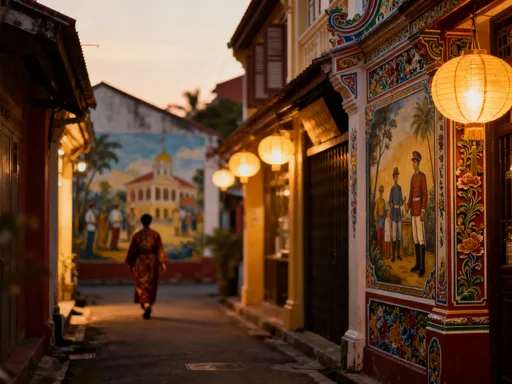
No place in Malacca captures the rhythm of cultural fusion more vividly than Jonker Street, the beating heart of its Chinatown. By daylight, the street hums with a gentle energy—sunlight filters through colorful awnings, casting patterns on weathered shop fronts. Antique dealers arrange porcelain vases and carved wooden cabinets, while textile vendors display intricate kebaya dresses and embroidered hand fans. These are not mere souvenirs; many items have been in families for generations, sold by descendants who understand their lineage. Walking Jonker Street is not just shopping—it’s witnessing the continuity of tradition in a modern world.
As dusk falls, the atmosphere transforms. Strings of lanterns glow above the street, and the scent of sizzling satay and caramelized sugar fills the air. The weekend night market, which runs from Friday evening through Sunday night, draws both locals and visitors into a vibrant celebration of culture and cuisine. Food stalls line the sidewalks, serving everything from crispy curry puffs to steaming bowls of chicken rice ball—a Malaccan specialty where rice is shaped into orbs and served with aromatic broth and chili sauce. Among the most cherished offerings are Peranakan dumplings, delicate parcels of dough filled with spiced shrimp or pork, reflecting the hybrid identity of the Straits Chinese community.
Beyond commerce, Jonker Street is a living museum of Peranakan heritage. Scattered among the shops are small, family-run museums like the Baba & Nyonya Heritage Museum, housed in a grand 19th-century townhouse. Inside, visitors encounter opulent interiors with carved rosewood furniture, porcelain collections, and wedding attire that speak to a culture shaped by Chinese roots and Malay surroundings. The Peranakan people, descendants of early Chinese immigrants who married local women, developed a unique identity expressed through language, dress, and food. Their legacy is not frozen in time but actively celebrated—in festivals, recipes, and intergenerational storytelling.
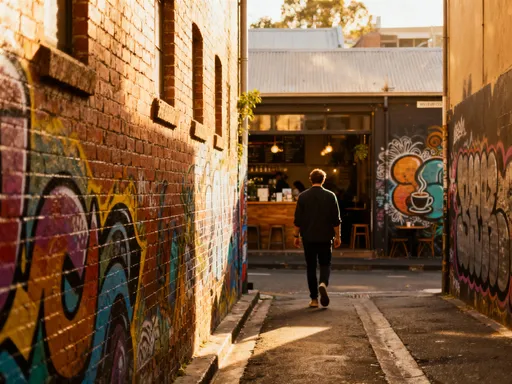
Street art adds another layer to Jonker Street’s narrative. Murals painted on alley walls depict scenes of daily life—a grandmother feeding chickens, children playing hopscotch, a tailor at his sewing machine. These whimsical yet poignant images, often created by local artists, serve as quiet tributes to the ordinary lives that shape Malacca’s soul. They invite passersby to pause, reflect, and connect. For the 30- to 55-year-old woman traveling with family or friends, Jonker Street offers a rare blend of sensory delight and emotional resonance—a place where nostalgia meets discovery, and every corner holds a memory waiting to be shared.
Sacred Grounds: Temples, Mosques, and Houses of Worship
In a city shaped by migration and trade, places of worship stand as enduring symbols of harmony. Malacca’s skyline is not dominated by skyscrapers but by minarets, temple roofs, and church spires—all existing within a few blocks of one another. This proximity is more than architectural coincidence; it reflects centuries of peaceful coexistence among Malay Muslims, Chinese Buddhists and Taoists, Indian Hindus, and Christian communities. Each sacred site is not merely a monument but a living center of daily life, where prayers are offered, festivals are celebrated, and community bonds are strengthened.
Cheng Hoon Tien Temple, located just off Jonker Street, is one of the oldest and most revered Chinese temples in Malaysia. Built in the 17th century by the Peranakan community, it blends architectural styles from Fujian, Canton, and Jiangnan, with sweeping tiled roofs, intricate wood carvings, and courtyards open to the sky. Inside, incense coils upward in thin spirals, and the soft clink of divination blocks echoes as worshippers seek guidance. The temple remains an active place of devotion, especially during Lunar New Year and the Hungry Ghost Festival, when lanterns illuminate the streets and offerings are laid out for ancestors. Its preservation is a testament to the community’s dedication to maintaining spiritual and cultural continuity.
Nearby, the Kampung Kling Mosque presents a striking contrast in design yet shares a similar spirit of integration. Constructed in the 18th century by Indian Muslim traders, the mosque features a blend of Islamic, Hindu, and Chinese architectural elements—a domed roof reminiscent of a temple, wooden carvings with floral motifs, and a prayer hall raised on stilts. Unlike many colonial-era religious buildings that were segregated by community, this mosque stands in close proximity to temples and churches, underscoring Malacca’s long-standing tradition of mutual respect. Visitors are welcome to observe from outside, and women are encouraged to dress modestly when approaching the premises, covering shoulders and legs as a sign of reverence.
Equally significant is Christ Church, a red-brick Dutch Reformed church completed in 1753. Its austere yet elegant facade, built from Dutch bricks shipped from the Netherlands, stands as a reminder of Malacca’s colonial past. Inside, marble tombstones etched with Dutch inscriptions line the floor, telling the stories of merchants, governors, and missionaries. While it is now used primarily for ceremonial purposes, the church remains a place of quiet reflection, its cool interior offering respite from the tropical heat. Together, these houses of worship—Cheng Hoon Tien, Kampung Kling Mosque, and Christ Church—form a triangle of faith that speaks to Malacca’s enduring pluralism. They are not relics of division but monuments to coexistence, where the sacred and the everyday intertwine.
Echoes of Empire: Forts, Churches, and Colonial Traces
The legacy of colonial rule in Malacca is neither ignored nor glorified—it is acknowledged with nuance, allowing visitors to engage with history in a balanced and thoughtful way. One of the most iconic remnants of this era is A Famosa, a fortress originally built by the Portuguese in 1511 after their conquest of the sultanate. Though only a single gate—Porta de Santiago—remains standing today, it serves as a powerful symbol of Malacca’s turbulent past. The structure, now preserved within a landscaped park, invites quiet contemplation rather than triumphalist storytelling. Informational plaques provide context about the Portuguese presence, their conflicts with regional powers, and their eventual defeat by the Dutch in 1641.
From A Famosa, a short walk uphill leads to St. Paul’s Hill, crowned by the ruins of St. Paul’s Church. Originally built by the Portuguese as a Catholic chapel and later used by the Dutch as a burial site for Christian elites, the church now stands roofless, its weathered stone walls open to the sky. Tombstones embedded in the walls bear inscriptions in Dutch, Portuguese, and Latin, offering glimpses into the lives of those who once shaped the city’s destiny. The panoramic view from the hill overlooks the Malacca River and the modern cityscape, creating a powerful juxtaposition between past and present. It is a place for reflection, not spectacle—a reminder that empires rise and fall, but the land endures.
Christ Church, located in the heart of the city, further illustrates the Dutch imprint on Malacca. Its distinctive red façade, made from Dutch clay bricks, has become one of the city’s most photographed landmarks. Inside, the pulpit is carved from a single piece of Burmese teak, and the ceiling features intricate stenciled patterns. While the building is well-preserved, interpretive materials avoid romanticizing colonialism. Instead, they emphasize the complex interactions between rulers and locals, the blending of administrative systems, and the ways in which Malaccans adapted and preserved their identities under foreign rule. This balanced presentation allows visitors to appreciate architectural beauty without losing sight of historical context.
What sets Malacca apart from other former colonial cities is its refusal to sanitize or dramatize the past. There are no reenactments of battles, no costumed guides portraying conquistadors or governors. Instead, history is conveyed through quiet details—the texture of weathered stone, the curve of a roofline, the language on an old tombstone. For the mature traveler seeking depth over drama, this approach is profoundly respectful. It acknowledges that history is not a performance but a layered reality, best understood through patience, observation, and humility.
Beyond the Main Path: Hidden Cultural Corners
While Jonker Street and the major landmarks draw well-deserved attention, some of Malacca’s most meaningful experiences lie off the beaten path. These quieter spaces offer moments of intimacy and authenticity, allowing visitors to connect with the city’s soul beyond the postcard views. One such gem is the Malacca Literature Museum, housed in a beautifully restored traditional Malay house. With its steep thatched roof, wooden pillars, and open-air veranda, the building itself is a work of cultural preservation. Inside, the museum showcases manuscripts, rare books, and historical documents that trace the evolution of Malay literature and storytelling. It is a peaceful retreat, often visited by local students and elderly readers who come to sit in the shaded courtyard and lose themselves in poetry and folklore.
Near the banks of the Malacca River, a small Sikh temple stands quietly amidst the bustle of city life. Built by early Punjabi traders and guards during the British era, the temple remains an active place of worship, its golden dome catching the morning light. Visitors are welcome to observe from a respectful distance, and some locals offer quiet explanations of the faith’s principles to curious onlookers. The temple’s presence is a reminder that Malacca’s diversity extends beyond the major ethnic groups—it includes smaller communities whose contributions have quietly shaped the city’s identity.
Another overlooked site is the Kampung Morten Heritage Village, a residential enclave where traditional Malay houses stand side by side along narrow lanes. Unlike reconstructed villages designed for tourism, Kampung Morten is a living neighborhood, home to families who have lived there for generations. Residents maintain their homes with pride, preserving architectural details like carved wooden screens and elevated foundations that protect against flooding. Guided walks, often led by local volunteers, offer insights into daily life—how meals are prepared, how homes are kept cool in the heat, and how community ties remain strong. These experiences are not staged; they are real, unfolding at a gentle pace that invites connection rather than consumption.
For the thoughtful traveler, these hidden corners offer a different kind of enrichment—one rooted in stillness and observation. There are no crowds, no loudspeakers, no souvenir stalls. Instead, there is the sound of a woman grinding spices in a mortar, the sight of children playing sepak takraw in a courtyard, the smell of jasmine tea from an open window. These moments cannot be rushed or photographed perfectly, but they linger in memory. They remind us that culture is not just something to see, but something to feel, to breathe, to carry within.
Tastes That Tell Stories: Food as Cultural Language
In Malacca, food is more than sustenance—it is a living archive of history, memory, and identity. Every dish tells a story, shaped by centuries of migration, adaptation, and family tradition. The city’s cuisine is a testament to the Peranakan, or Straits Chinese, culture, where Chinese ingredients and techniques merged with Malay spices and cooking methods to create something entirely new. To eat in Malacca is to taste the past, one bite at a time.
One of the most iconic dishes is *asam laksa*, a tangy fish-based noodle soup flavored with tamarind, lemongrass, and chili. Served with shredded pineapple and cucumber, it balances sour, spicy, and savory notes in a way that awakens the senses. The dish originated as a way to preserve fish in the tropical climate, but over time, it evolved into a beloved staple. Families guard their recipes closely, passing them down through generations. Eating *asam laksa* at a roadside stall, where an elderly vendor stirs a giant pot with practiced ease, is not just a meal—it is an act of cultural transmission.
Another cherished favorite is *ayam pongteh*, a rich chicken stew simmered in fermented soybean paste, palm sugar, and garlic. The deep brown sauce clings to tender pieces of meat, offering a flavor that is both earthy and sweet. Traditionally prepared during family gatherings and festivals, the dish reflects the Peranakan love for complex, layered tastes. Many women still cook it in their home kitchens, using clay pots that enhance the depth of flavor. To be invited into one of these homes—even briefly, to share a meal with a local family—is a rare and touching honor.
For the more adventurous palate, *durian tempoyak* offers a bold combination of fermented durian and wild boar or fish. While the smell may challenge unaccustomed noses, the taste reveals a surprising umami depth, shaped by fermentation techniques passed down in rural communities. This dish, rarely found in restaurants, is often shared among neighbors or served during village celebrations. It represents a form of culinary resilience—using what the land provides, transforming strong flavors into something nourishing and meaningful.
Even sweets carry stories. *Kueh chang*, pyramid-shaped rice dumplings wrapped in bamboo leaves, are prepared during the Dragon Boat Festival. Each fold of the leaf, each pinch of the string, is done with care, echoing rituals performed by grandmothers decades ago. To watch a woman assemble these by hand, her fingers moving with muscle memory, is to witness the quiet power of tradition. In Malacca, food is never just food—it is memory made edible, love made tangible, history made delicious.
Traveling with Meaning: How to Respect and Engage Deeply
Visiting Malacca is not just about seeing sights—it is about engaging with a living culture in a way that honors its depth and dignity. For the traveler who values authenticity, mindfulness, and connection, there are simple yet powerful ways to ensure that the journey is meaningful for both visitor and host. The first step is timing. While weekends bring energy and night markets, they also bring crowds. Visiting Jonker Street on a weekday morning allows for quieter exploration, deeper conversations with shopkeepers, and a more reflective experience at temples and museums.
Dress plays an important role in showing respect, especially at religious sites. When visiting temples, mosques, or churches, covering shoulders and knees is a small gesture that communicates care and consideration. Many sites provide scarves or sarongs for visitors who need them, but bringing a light shawl or long skirt ensures preparedness and comfort. This practice is not about restriction but about participation—about stepping into a space with humility and openness.
Supporting local artisans and family-run businesses is another way to travel with purpose. Instead of purchasing mass-produced souvenirs, consider buying hand-painted tiles, embroidered kebaya, or homemade spice blends from small vendors who create them by hand. These items carry the imprint of skill and story, and the money spent supports livelihoods rooted in tradition. Sharing a meal at a family-run eatery, rather than a chain restaurant, does the same—every bite becomes a small act of cultural preservation.
Finally, slow travel is the most valuable gift a visitor can offer. Rushing from landmark to landmark reduces culture to a checklist. Sitting at a riverside café, watching boats drift by, listening to the call to prayer mix with the chatter of children, allows the soul of Malacca to reveal itself. It is in these unhurried moments that connection happens—that the past speaks, the present breathes, and the traveler leaves not just with photographs, but with understanding. Malacca does not demand grand gestures. It asks only for presence. And in return, it offers a story that becomes part of your own.